Avi Alkalay Digital Awareness and Flying Spirit

Archive for tag “featured”

Profissões Web 2.0 4 comments By AviPublished: Wed, 02 Apr 2008 09:46:02 -0300 Updated: Wed, 23 Jul 2008 10:16:37 -0300 Published: 2 Apr 2008 Updated: 23 Jul 2008 Published: 9:46 am Updated: 10:16 am Categories: Web 2.0 Tags:

Em 2007 participei de uma série de reuniões com clientes e discussões sobre a importância do Second Life na estratégia de qualquer pessoa ou empresa que se julgue “in”.

Veja, não estou dizendo que o Second Life é importante, mas que muitas pessoas e empresas chegaram a discutir isso seriamente.

Levante a mão quem já entrou no Second Life. Agora levante a mão quem entrou mais de uma vez e continua usando.

A Sociedade da Informação de hoje não esta pronta nem tecnológica nem psicologicamente para esses mundos virtuais. Mas eles nos ensinaram uma lição: muito relacionamento humano está acontecendo em forma de fluxo de bits, e as empresas querem estar onde as pessoas [seus clientes] estão.

O Second Life (e similares) é a manifestação máxima dessa malha digital de relacionamentos (também conhecida como Web 2.0), mas se é ainda inusável, que tal as empresas clarearem seus objetivos - estar perto das pessoas, lembra? - e usarem outras ferramentas da mesma família para atingí-los?

Que tal criarem blogs corporativos para se comunicarem de forma mais direta, descontraida e interativa com seus clientes, como a IBM, Sun, Intel, Google, Microsoft, Nokia tem feito ?

Que tal aumentarem sua participação em comunidades onde as pessoas estão, como Orkut, Facebook etc? Essas festas online, especificamente, são um prato cheio para fabricantes de produtos de uso final. E não estou falando de spam, mas de uma participação oficial que realmente agregue valor.

Que tal usarem conceitos de Wikinomics a fim de criar novos produtos baseado diretamente no desejo do consumidor ?

Agências de propaganda que tiverem afinidade com essas novas características da Sociedade da Informação poderão levar seus clientes a graus de competitividade mais confortáveis.

Profissões como Gerente de Redes Sociais, Blogueiro Corporativo, Evangelizador Digital estão surgindo no horizonte, são profissionais raros e que começam a ser procurados pelas empresas.

Esse profissional precisa de alguns ingredientes bem apimentados: capacidade de comunicação, bom conhecimento dos produtos da empresa, entender como redes sociais digitais funcionam, seus códigos de ética etc, alguns conhecimentos do linguajar dessa nova esfera (feeds, podcasts, trackbacks, avatars, OpenIDs etc) para fazer a tecnologia efetivamente trabalhar a seu favor, noções de user-friendlyness, etc. Meio técnico, meio comunicador, meio designer, meio webguy. Uma mistura bastante peculiar de características.

E como se trata de comunicação externa, há um certo risco e medo envolvido. “Será que meu blogueiro vai falar o que não deve, revelar segredos, etc?”.

Posso contar como isso aconteceu aqui na IBM. Há anos foram criados blogs, wikis e outras ferramentas típicas da Web 2.0 na Intranet. Todo funcionário pode ter seu blog interno, pode criar um wiki, etiquetar sites e pessoas, e automaticamente tem um perfil online tipo Orkut, que chamamos de Bluepages. Há também uma atmosfera e incentivo quase que formal para fomentar inovação, mas isso é outra história.

Alguns funcionários que começaram a blogar internamente passaram a fazer isso para a Internet. Houve uma espécie de seleção natural dos escritores.

O curioso é que essas ferramentas internas não foram criadas para fazer tal seleção. Mas seu uso é tão marcante no dia a dia dos funcionários que elas até viraram produtos para empresas que querem criar sua infraestrutura para a Web 2.0 sem o uso das ótimas opções em Software Livre que existem por aí.

Mas voltando às profissões, o mais interessante é que não há curso universitário que forme para tal missão. Pense nisso.

How Microsoft raped ISO 3 comments By AviPublished: Thu, 20 Mar 2008 07:18:29 -0300 Updated: Wed, 02 Apr 2008 09:13:13 -0300 Published: 20 Mar 2008 Updated: 2 Apr 2008 Published: 7:18 am Updated: 9:13 am Categories: OpenDocument Format Tags:

One of the most critical and discussed points of the whole OOXML subject is how the specification lets you include binary proprietary information.

Let me show you how it happens with a piece of an OOXML document, the red-marked text is the problematic part (see for yourself, §6.2.2.14, paper page 4,813, lines 7–13):

<v:shape>
<o:ink i="AMgFHQSWC+YFASAAaAwAAAAAAMA..." annotation="t" contentType="application/x-ms-ink"/>
</v:shape>

So you, as a programmer, please tell me what to do if you are developing an application that must read and generate this kind of document. How can I find documentation about this encoded binary stream? Is this a good practice in XML? Anyway, this kind of (bad) design appears in many parts of the OOXML spec. Want more examples of bad design? Have fun.

Suppose I really want to develop this kind of support in my application, I am a master programmer and reverse-engineered a few examples generated with a copy of MS Office 2007 that I had to buy. Or maybe I just found the specification of this proprietary application/x-ms-ink type and go to develop a library to handle it.

Inevitably, my library will reimplement aspects of some Microsoft library with same functionality, and according to a Software Freedom Law Center report, the Microsoft Open Specification Promise (OSP, basically the not-open-enough license Microsoft lawyers wrote for the usage and implementation of OOXML) cover’s the specification only, not code.

I will be sued for patent infringement. On software rewrite, not on specification usage.

Then the rape begins. Microsoft is claiming that this was solved in the ISO’s BRM meeting. This is the solution, from the ridiculous 12 pages resolutions, page 7:

Resolution 25: The BRM decides to accept the editing instructions contained in http://www.itscj.ipsj.or.jp/sc34/def/BRM/Response_0135_bitfields.doc in place of R 135, replacing “deprecated” by “transitional”, and with the following addition: The Editor shall ensure that all existing attributes defining the bitfields described above shall be “transitional”—so resolved.

Who reads this resolution with high level eyes may think that all binary fields will be removed from the specification. But please, you, as a programmer, tell me how the so called Editor will find all and every single part of a 6000+ pages specification containing bitfields? How he’ll expand all those bitfields in an XML subspecification? Will he invent some? Is he the right person (or team) to do that?

When done and if done, the specification will be something completely new, full of new parts. Will jump from 6063 pages to maybe 7500. Oh, and did I mention it will be something that even MS Office 2007 or 2008 don’t support today? Supporting or not, implemented or not, this new unexistent specification is the “thing” that countries’ National Bodies are voting right now, without even seeing it, without checking if it was corrected, without having time for this because they didn’t receive it for revision.

They won’t have time to review 6000+ pages because the deadlines defined by the ISO’s Fast Track process are over.

So the question is how ISO/IEC and JTC1 let such a big and problematic specification enter the light Fast Track process? My answare: ISO was raped.

I’ve been talking to several people that will define their country’s vote and their mindset is “are you really putting ISO in such a bad position?” Well, yes. You know, in the end ISO is not god. They are a bunch of people that, like you and me, have religions, aspirations, problems, family, go to the bathroom etc. Like you and me, they may be also naive in regard to some subjects, particularly document formats. Then comes Microsoft excellent speakers showing PowerPoint charts that are plain lies (e.g. “OpenOffice.org supports OOXML”) and people believes them.

People have two choices: to question ISO’s reputation in the OOXML case, or question IBM, Sun, Oracle, Red Hat, Free Software Law Center, ODF Alliance and many other institutions’ reputation when they massively scream in chorus that OOXML has serious technical, legal and standardization process issues.

This is a world where organizations like ECMA has completely lost the respect of the technical community. But this is not a big problem, because we have other similar, still reliable bodies as OASIS, W3C, OSF, etc.

This is a world where we will have to work hard to make ISO regain its (currently damaged) reliable status. This is a big problem, because we only have one (and only need one) International Standards Organization.

This is your responsibility. To start this work get involved with your country’s National Body for standardization and promote the creation of a formal letter to ISO about the OOXML process, its problems and how ISO let that happen. INCITS in USA, ABNT in Brazil, INN in Chile etc.

How to Make High Quality DVD Rips 22 comments By AviPublished: Sun, 02 Mar 2008 09:36:50 -0300 Updated: Tue, 20 May 2008 08:45:26 -0300 Published: 2 Mar 2008 Updated: 20 May 2008 Published: 9:36 am Updated: 8:45 am Categories: Multimedia Tags:

Some friends asked so the following is how I encode (rip) DVDs.

Choosing the file format: .AVI, .OGG, .MP4 or .MKV ?

The ripped video file format is a decision you must make. Currently my format of choice is .MKV or Matroska. I’ll explain why.

It is quite idiotic to say that an .MP4 movie has better quality than a .AVI or vice-verse (or any other combination of comparisons). OGG, MP4 (MPEG-4 Part 14), MKV (Matroska), AVI, WMV (or ASF) are just containers, envelopes. Video quality depends on what goes inside it.

“Multimedia” has this name because you have multiple types of media: video in multiple angles, multiple audio options including different languages and channels (stereo, 5.1, 6 channels etc), subtitles in several languages, chapter information, menu etc. Think about a DVD. So this is a graphical view of how things are organized inside a 900MB movie file in a modern format as MKV or MP4:

Header with tags, track names, chapters info, seek positions Main Video track (MPEG-4 AVC/H.264) Attachments as JPG images, documents, scripts or text files
Video segment showing another angle (MPEG-4 ASP/Xvid/DivX)
Audio track: English Dolby Surround 5.1 (AC3)
Audio track: Director’s comments stereo (MP3)
Audio track: Portuguese Dolby Surround 5.1 (DTS)
Subtitle track: Portuguese (Unicode text)
Subtitle track: Chinese (Unicode text)
Subtitle track: English (VobSub)
byte 100K byte 100M byte 200M byte 310M byte 420M byte 530M byte 650M byte 780M byte 895M byte 900M

A digital multimedia file format must be capable to contain all this different medias and multiplex them in parallel so you won’t have the video in the first 500MB of the file and the audio on the following 500MB (this can’t work for streaming). And this is exactly what modern file formats as MP4 and MKV do: they carry all your movie-related data together.

This is a comparison of all these file formats based on my personal experience with them (a more formal comparison can be found in Wikipedia):

.MKV .MP4 .AVI
Industry support Almost none Good and increasing, specially on Apple platforms, the mobile scene and Nero Digital ecosystem Treated as legacy popular format
Usage on the web Very popular on HD or high quality DVD rips Very popular on HD or high quality DVD rips, supported by Flash Player, YouTube, Google Video Popular amongst low-quality DVD rips
Support for advanced video formats and multiple video angles Yes. MPEG-4 ASP (DivX, Xvid), MPEG-4 AVC (a.k.a. H.264) etc Yes. Only MPEG-4 systems and a few others Problematic and No
Support for multiple audio tracks (channels, formats, languages and “director’s comments”) Yes Yes. Formats are only MP3, AAC and a few others not very popular Yes
Support for tags (artist, title, composer, etc as MP3’s ID3) Yes Can be supported by MP4 extensibility but this is not standardized across authoring tools (iTunes, GPAC etc) and players (Amarok, Media Player Classic, iPod, Windows Media Player etc) No
Support for attachments with mime-types (used to attach movie posters images or other files) Yes No
Support for chapter marks Yes No
Support for multiple language embedded soft-subtitles Yes. VobSub (as extracted from DVDs), plain timed UTF-8 text (SRT, SUB) etc No
Support for naming tracks with human names as “Director’s comments” or “Portuguese subtitles” etc Yes No No
Support for menus (as in DVDs) and interaction Yes through an XML idiom, but unsupported by most players Yes through SVG, but unsupported by most players No
The container overhead in bytes in the final file Very small Very small Very big
Supported by free and Open Source multiplatform authoring tools Perfect on Linux, Unix, Windows and Mac Yes, with some intellectual property issues and tools need to mature Yes

Personally I believe MP4 is the multimedia file format for the future because since it is getting popular, all these unstandardized features will get stabilized. MP4 is an ISO standard and the increasing industry support can be felt on iPods and portable devices, and most notable on home DVD players capable of playing the 700MB MP4 video file burned in a CD.

By the way, remember this:

  • MP4 is not an evolution of MP3. AAC (MPEG-4 Part 3) is.
  • MP5 and MP6 (used to classify portable media players) are things that simply doesn’t exist in the multimedia scene.
  • .M4A, .M4V, .MOV and .3GP files can safely be renamed to .MP4. MP4 is the generic standard name.

Meanwhile, MKV wins everything but on the Industry Support category. But this doesn’t really matter, and I’ll explain why. Since MKV is just a container, the large video, audio etc streams can be extracted and repackaged into MP4 and vice-versa in seconds. No transcoding (decoding followed by an encoding into another format) is needed.

So today I store my videos in the most feature rich and well supported by players format: MKV.

OGG or OGM (the container file format) is practically dead in my opinion. They were created as part of the Xiph initiative for a complete open source patent-free multimedia framework, but seems nobody uses it anymore for video. From the same family, Vorbis (the audio codec compared to MP3, a.k.a. .OGG) is very good but also very not popular. Theora (the video codec) is frequently comparable to old MPEG-1 in terms of quality and compression ration so currently, if you want quality and are not concerned about patents, MPEG-4 AVC is the best choice. FLAC, Xiph’s lossless audio codec, is the winner of the family: very popular, massively used, and recommended.

Encoding the DVD

I use HandBrake, the most practical Open Source (and overall) movie encoder. It runs on Linux, Mac and Windows and uses the same Open Source libraries as ffmpeg, mplayer/mencoder, xine, etc. While these programs are generic video handlers (with thousands of confusing configuration parameters to sustain this generalistic status) HandBrake is optimized only for ripping so it is very easy to use, yet extremely powerful.

#!/bin/bash

##
## This is the script I use to make hifi DVD rips including chapter markers and
## subtitles. It uses Handbrake.
## Contains what I found to be the best quality ripping parameters and
## also let me set simple parameters I need.
##
## Avi Alkalay <avi at unix dot sh>
## http://avi.alkalay.net/2008/03/mpeg4-dvd-rip.html
##
## $Id$
##

#set -vx

HANDBRAKE=${HANDBRAKE:=~/bin/HandBrakeCLI}
#HANDBRAKE=${HANDBRAKE:="/cygdrive/c/Program Files/Handbrake/HandBrakeCLI.exe"}
## Where is the Handrake encoder executable.
## Handbrake is the most practical free, OSS, DVD riper available.
## Download HandBrake for Linux, Mac or Windows at http://HandBrake.fr

INPUT=${INPUT:=/dev/dvd}
## What to process. Can also be a mounted DVD image or simply '/dev/dvd'

TITLE=${TITLE:=L}
## The title number to rip, or empty or "L" to get the longest title

#CHAPTERS=${CHAPTERS:=7}
## Example: 0 or undefined (all chapters), 7 (only chapter 7), 3-6 (chapters 3 to 6)

#VERBOSE=${VERBOSE:="yes"}
## Wether to be verbose while processing.

SIZE=${SIZE:=1200}
## Target file size in MB. The biggest the file size, the best the quality.
## I use to use from 1000MB to 1400MB for astonishing high quality H.264 rips.

OUTPUT=${OUTPUT:="/tmp/output.mkv"}
## Output file. This will also define the file format.
## MKV (Matroska) is currently the best but MP4 is also good.

AUDIO=${AUDIO:="-E ac3 -6 dpl2 -D 1"} # For AC3 passthru (copy).
#AUDIO=${AUDIO:="-E lame -B 160"} # For MP3 reencoding. Good when input is DTS.
## Audio parameters. If input is AC3, use it without transcoding.
## If is DTS, reencode to MP3.

MATRIX=${MATRIX:=`dirname $0`/eqm_avc_hr.cfg}
## x264 matrix to use. The matrix file may increase encoding speed and quality.
## This one is Sharktooth's as found
## at http://forum.doom9.org/showthread.php?t=96298

######### Do not change anything below this line ##############

## Make some calculations regarding title and chapters based on parameters.
SEGMENT=""
if [[ "$TITLE" == "L" || -z "$TITLE" ]]; then
	SEGMENT="-L"
else
	SEGMENT="-t $TITLE"
fi

[[ -n "$CHAPTERS" && "$CHAPTERS" -ne 0 ]] && SEGMENT+=" -c $CHAPTERS"

[[ "$VERBOSE" != "no" ]] && VERB="-v"

# Define args for the x264 encoder. These are some values I found on the net
# which give excelent results.
X264ARGS="ref=3:mixed-refs:bframes=6:b-pyramid=1:bime=1:b-rdo=1:weightb=1"
X264ARGS+=":analyse=all:8x8dct=1:subme=6:me=umh:merange=24:filter=-2,-2"
X264ARGS+=":ref=6:mixed-refs=1:trellis=1:no-fast-pskip=1"
X264ARGS+=":no-dct-decimate=1:direct=auto"
[[ -n "$MATRIX" ]] && X264ARGS+=":cqm=$MATRIX"

# Encode...
"$HANDBRAKE" $VERB -i "$INPUT" -o "$OUTPUT" \
	-S $SIZE \
	-m $SEGMENT \
	$AUDIO \
	-e x264 -2 -T -p \
	-x $X264ARGS

# Repackage to optimize file size, to include seek and to include this
# this script as a way to document the rip...
echo $OUTPUT | grep -qi ".mkv"
if [[ $? && -x `which mkvmerge` && -f $OUTPUT ]]; then
	mv $OUTPUT $OUTPUT.mkv
	mkvmerge -o $OUTPUT $OUTPUT.mkv \
		--attachment-name "The ripping script" \
		--attachment-description "How this movie was created from original DVD" \
		--attachment-mime-type application/x-sh \
		--attach-file $0

	[[ -f $OUTPUT ]] && rm $OUTPUT.mkv
fi

The script seems long because it is fully documented but it actually only collects some parameters and simply runs the HandBrake encoder like this (passed parameters are in red):

~/bin/HandBrakeCLI -v -i /dev/dvd -o /tmp/output.mkv \
    -S 1200 \
    -m -L \
    -E lame -B 160 \
    -e x264 -2 -T -p \
    -x ref=3:mixed-refs:bframes=6:b-pyramid=1:bime=1:b-rdo=1:weightb=1:analyse=all:8x8dct=1:subme=6:me=umh:merange=24:filter=-2,-2:ref=6:mixed-refs=1:trellis=1:no-fast-pskip=1:no-dct-decimate=1:direct=auto:cqm=~/src/randomscripts/videotools/eqm_avc_hr.cfg

All the rest is what I found to be the best encoding parameters.

The resulting video file (/tmp/output.mkv in this case) will contain correctly cropped video and audio quality as good as the DVD (it is almost lossless), and chapter breaks at the same positions read from the DVD.

In a Core Duo machine as my laptop running Fedora 8 or Windows XP, a 2 pass H.264 encoding (2 pass improves quality and H.264 is newer standard MPEG-4 technology better than DivX/Xvid) takes about 4 to 5 hours for a regular 2 hours movie, so leave it encoding while you go to sleep. A Pentium 4 machine running Ubuntu takes about 17 hours for the same rip.

I use to rip one chapter from the movie first (use your preferred video player or lsdvd command to find the shortest chapter), check quality, compare to DVD, fine tune, try again and then shoot full DVD ripping.

After encoding I use to repackage the audio/video stream with Matroska’s mkvmerge (or mmg, its GUI version available on any Linux distribution as “mkvtoolnix” package, and installable for Windows or Mac OS from Matroska’s website) to optimize seeks and to include soft subtitles (that can be turned on and off as on regular DVDs), but I’ll explain that in another HOWTO.

Give Your Ripped Movie a Descriptive File Name

I use to organize my media library in a standard way I invented for myself and which I suggest you to use too.

My movie file names shows everything that the file includes. Some examples:

  • Indiana_Jones_and_The_Raiders_of_the_Lost_Ark_IMDB{tt0082971}-Xvid{720×304_23.98fps}+MP3{ENG,POB_VBR}+Sub{ENG,SPA,POB}+Covers.mkv

    This is the Indiana Jone’s Raiders of the Lost Ark movie, whose IMDB index is tt0082971 (IMDB{tt0082971}). It was ripped with the old Xvid codec and contains 720×304 pixels frame size at a rate of 23.98 frames per second (Xvid{720×304_23.98fps}). It also contains selectable audio tracks in English and Brazilian Portuguese encoded in variable bit rate MP3 (MP3{ENG,POB_VBR}). In addition, there is also selectable subtitles in English, Spanish and Brazilian Portuguese (Sub{ENG,SPA,POB}). The file also contains the cover images as attachments.
  • Harold_and_Maude_IMDB{tt0067185}-H264{672×368_3Pass_25fps}+HEAAC{EN}+Sub{POR,EN,FRE}+Chapters+Covers.mkv

    The old Harold and Maude movie whose IMDB index is tt0067185 (IMDB{tt0067185}). It is encoded with H.264 in 3 passes and has 672×368 pixels frame size at a rate of 25 frames per second (H264{672×368_3Pass_25fps}). There is only one English audio track encoded in modern HE-AAC (HEAAC{EN}). Subtitles in Portuguese, English and French (Sub{POR,EN,FRE}), chapter information and attached cover images. This is very complete high quality DVD backup.
  • I_Am_Legend_IMDB{tt0480249}-H264{704×304_23.98fps}+AC3{ENG_5.1}+Sub{POR}.mkv

    The I Am Legend movie whose IMDB index is tt0480249 (IMDB{tt0480249}), video encoded in H.264 with 704×304 pixels frame size (H264{704×304_23.98fps}), original 5.1 channels AC3 audio in English (AC3{ENG_5.1}) and subtitles in Portuguese (Sub{POR}).

The advantages of this scheme are:

  • It is web safe with no spaces in filenames. All underlines. It is also DOS safe.
  • To have the IMDB index let me know exactly which movie this file contains. This is particularly good to avoid ambiguity for movies that have remakes as Ben Hur, or movies that have an official name but are well known by other names or have international titles.
  • To know the encoding method, subtitles included and chapters info give me the overall quality of the movie right away.
  • Special attention to audio and subtitle languages. Having them on the filename let me know I will understand its content without having to play. Sometimes I can’t play the file because I logged in my home computer remotely.

Playing the Ripped File

To play this advanced Matroska media file that contains such a rich set of metainformation and highly compressed digital content you will need an advanced player too. And happens that the best players are the Open Source ones. So use these players:

These are Media Player Classic screenshots demonstrating how to activate the advanced content inside a Matroska file. Players on other platforms have similar capabilities and menus.

Activating embedded subtitles and languages
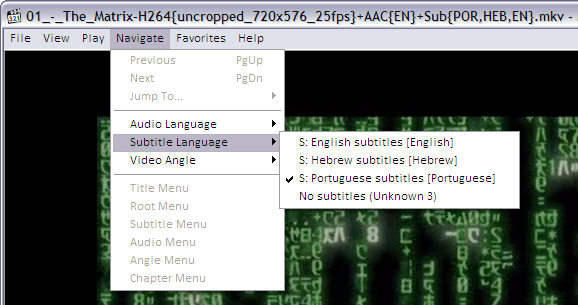
The player lets you choose the audio language and subtitles. On MPC for example, this is how you turn on and off and choose the language for subtitles.
Choosing subtitles language

As you can see, the player found subtitles embedded in the MKV file in English, Hebrew and Portuguese.

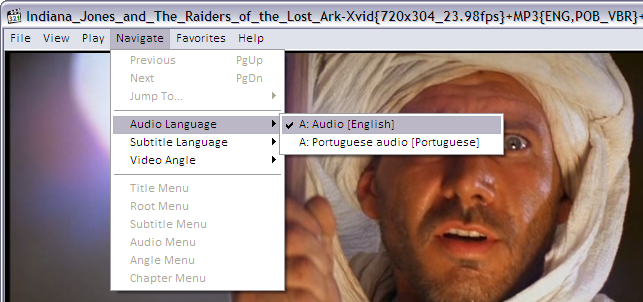
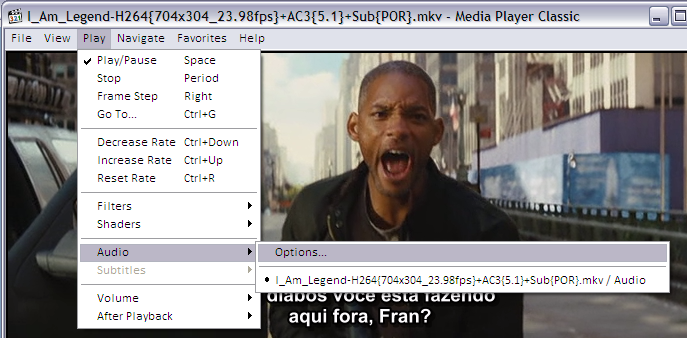
If the MKV file contains many audio tracks (as different languages, director’s comments etc) this is how to select it:

Selecting audio track to play in Media Player Classic

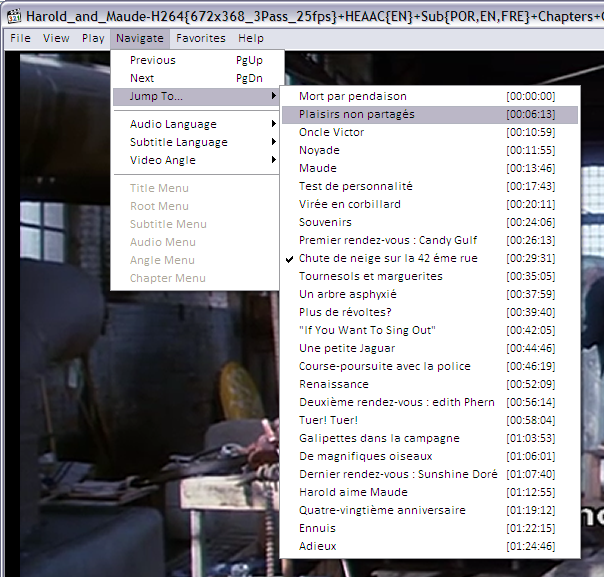
And to jump directly to a specific chapter on the movie, if the MKV file contains this kind of information:

Using Media Player Classic to browse chapter in a movie file

Improving audio volume
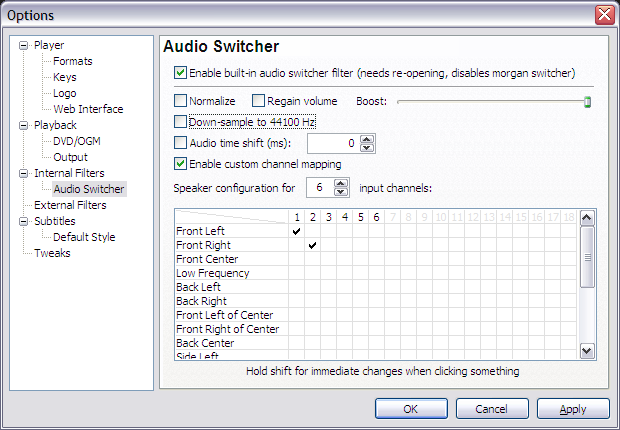
If you ripped the movie without reencoding the audio, the final file will contain DVD’s original AC3 audio tracks in 6 channels (5+1). This may sound with a lower volume when played in a 2-speaker system as your laptop, iPod, etc because 4 channels are simply not being played. To remediate this the player will have to downsample the audio. In other words, it will remix the 6 channels into 2 stereo channels while playing. The Media Player Classic options should look like this:

Selecting Media Player Classic\'s Audio Options

Configuring audio downsample on Media Player Classic

Como Tirar Passaporte Urgente 114 comments By AviPublished: Mon, 14 Jan 2008 21:08:50 -0200 Updated: Thu, 13 Mar 2008 21:34:02 -0300 Published: 14 Jan 2008 Updated: 13 Mar 2008 Published: 9:08 pm Updated: 9:34 pm Categories: Community and SocietyTravels Tags:

Seu passaporte vai vencer em menos de 6 meses? Pintou uma viagem ao exterior que é urgente e inadiável? Não consegue uma data decente para agendar a passaportagem na Polícia Federal?

Se você seguir as dicas abaixo, terá um novo passaporte definitivo nas mãos em 2 dias. Tudo começa no site da Polícia Federal, mas eu forneço links mais diretos abaixo.

Vai precisar do seguinte:

  1. Junte os documentos originais exigidos pela Polícia Federal que são RG, passaporte anterior, título de eleitor, comprovante de votação nas últimas eleições (emita um online no site do TSE), certificado de naturalização para os naturalizados.
  2. Preencha online o formulário de emissão de passaporte. Preencha com muito cuidado, pois o site costuma se embaralhar e decidir que você mora em Adamantina.
  3. Um dos últimos campos lhe perguntará a unidade de emissão do passaporte. Selecione sua cidade e clique em Buscar Posto de Emissão. Se você for de São Paulo, não selecione nenhum shopping. Vá direto à última opção chamada Núcleo de Passaportes na rua Hugo D’Ântola. Essa é a central do DPF e só lá poderão emitir passaporte rapidamente.
  4. Com o formulário aceito, o site vai emitir o que ele chama de GRU. Imprima-a, confira seus dados e pague a taxa de uns R$160. Você pode pagar diretamente no site do seu banco, com o número comprido do boleto que fica perto e representa o código de barras. Imprima o comprovante de pagamento da GRU do banco, emitido logo após a transação online e junte tudo isso aos documentos que você vai levar ao DPF.

O que descrevi acima é praticamente o procedimento padrão resumido. O próximo passo seria agendar um atendimento mas você já viu que só há disponibilidade para daqui a 2 ou 3 meses, muito tarde para a sua vida cheia de viagens-surpresa.

Então não agende.

Você deve ter uma justificativa para precisar de um passaporte com tanta urgência, então seu chefe ou superior deve escrever isso numa carta com o logotipo da empresa, escola, ONG etc.

Exemplo de texto para a carta:

7 de Janeiro de 2008

Ao Departamente de Polícia Federal

Assunto: Emissão urgente de passaporte para funcionário

O funcionário/aluno Avi Alkalay precisa bla bla bla bla que acontecerá em Paris, em Janeiro de 2008. Esta decisão foi feita na semana passada.

O funcionário/aluno já fez um passaporte provisório (validade de 6 meses) para sua última viagem a trabalho e precisa fazer um definitivo a fim de reduzir custos e trabalho à empresa e aos serviços públicos. Viagens decididas na última hora são freqüentes em nosso ambiente de trabalho.

Agradecemos a compreensão do DPF da necessidade de emitir um passaporte ao funcionário/aluno o mais rápido possível, visto que não há data disponível em tempo hábil para agendamento do atendimento.

Obrigado novamente.

Chefe Pereira da Silva do Avi
Gerente de Assuntos Randômicos
ACME do Brasil

O Chefe Pereira da Silva do Avi deve assinar, junte-a aos outros documentos e dirija-se em horário comercial ao DPF que em São Paulo fica na tal rua Hugo D’Ântola 95.

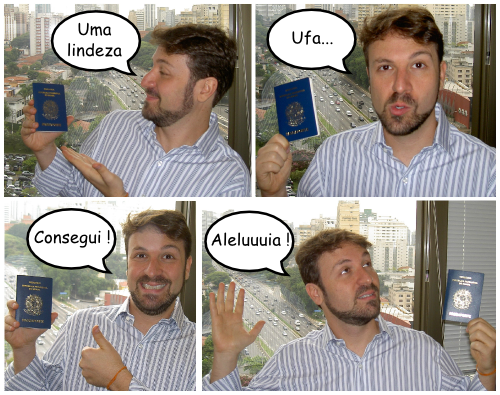
Colagem do passaporte

Primeira visita ao DPF

Tente ir de ônibus pois os estacionamentos ao redor cobram R$8 a primeira ½ hora e R$3 por hora seguinte. Eu fui de carro algumas vezes e sempre consegui estacionar na rua a poucos quarteirões de distância.

Na Polícia Federal de São Paulo, suba ao primeiro andar e procure pela Tânia que é a simpática agente (e aparentemente coordenadora) do DPF que atende casos urgentes (ou o agente que tiver essa missão na sua localidade).

Eu esperei na fila uns 40 minutos. Depois ela me encaminhou para um atendente que tirou foto, tomou as digitais de todos os dedos sem sujar as mãos, revisou os documentos etc. No total fiquei no DPF pouco menos de 2 horas. Ele disse que o prazo de emissão é de 6 dias úteis.

Segunda visita ao DPF

Mas eles deram uma agilizada e no final do dia seguinte recebi um e-mail informando que meu passaporte já estava pronto.

Se a primeira visita foi numa quarta-feira, a segunda foi já na sexta para pegar o passaporte. Apresentei o papel que me deram na primeira visita, esperei 20 minutos e saí com o novo passaporte nas mãos.

Conheço pessoas que não receberam o e-mail acima mas foram mesmo assim ao DPF dois dias depois e o passaporte já estava pronto.

Conclusão

O processo para emitir passaporte é demorado devido ao grande número de pessoas e o agendamento para todas elas, mas se você tem uma justificativa para a urgência, a Polícia Federal é compreensiva e dá uma forcinha.

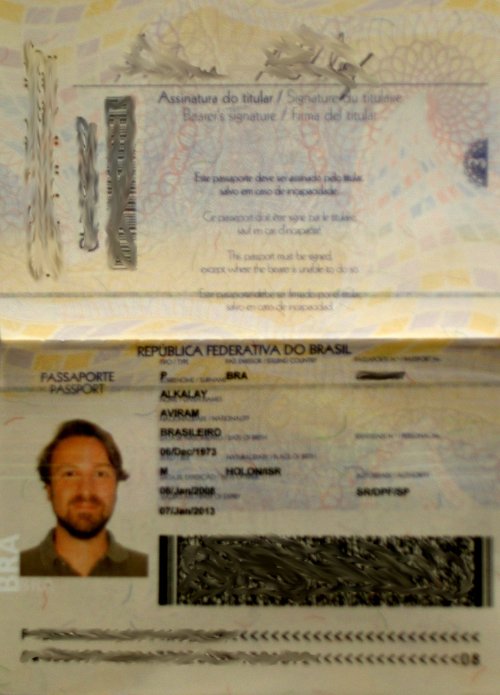
Exemplo de passaporte

Google Maps com Posicionamento por Antenas de Celular 4 comments By AviPublished: Mon, 07 Jan 2008 19:58:33 -0200 Updated: Wed, 30 Jan 2008 20:34:59 -0200 Published: 7 Jan 2008 Updated: 30 Jan 2008 Published: 7:58 pm Updated: 8:34 pm Categories: MobilityWeb 2.0 Tags:

Já faz um tempo que tenho me divertido com a nova versão do Google Maps que se instala no celular.

Ele faz uma coisa incrível: te diz mais ou menos onde você está agora, mesmo se seu celular não é equipado com GPS. É um recurso que se chama “My Location”.

Me falaram que a técnica que usada para fazer isso chama-se triangulação de antenas. Parece que é conhecida a posição geográfica de cada antena de celular e o Google Maps sente a potência de cada antena próxima e calcula a posição aproximada de acordo com a força do sinal de cada uma delas.

No mapa abaixo, estou realmente no ponto mais ao sul mas o Google Maps do meu celular calculou que estou um pouco mais ao norte, ponto este que vejo de minha janela a uns 100m mais ou menos.

Center of map
map
Estou realmente aqui
map
O Google Maps calculou que estou aproximadamente aqui

É bastante bom para eu que não tenho GPS.

Já disse antes e continuo repetindo: o Google Maps é o serviço mais legal da Web. Mais ainda que o Google Earth por ser mais acessível e leve.

O mapa desta página é feito com o Google Maps plugin para WordPress.

A Blogosfera 6 comments By AviPublished: Wed, 26 Dec 2007 11:47:14 -0200 Updated: Thu, 31 Jan 2008 18:56:42 -0200 Published: 26 Dec 2007 Updated: 31 Jan 2008 Published: 11:47 am Updated: 6:56 pm Categories: Community and SocietyEssaysWeb 2.0 Tags:

Um blog é um website qualquer cujo conteúdo é organizado como um diário (log, em inglês), ou seja, por datas e em ordem cronológica. O nome surgiu quando “web log” virou “weblog”, que em uma brincadeira se transformou em “we blog”, para enfim se popularizar em “blog”.

A cultura dos blogs tem um dicionário de jargões:

  • Post: um artigo ou publicação que pode conter texto, imagens, links, multimídia, etc. Um post tem um título, data e hora, é categorizado sob um ou mais assuntos como “vinhos”, “tecnologia”, “viagens”, “poesia”, etc., definidos pelo dono do blog. Usa geralmente linguagem mais direta e descontraída, e pode ser tão longo quanto um extenso artigo, ou conter somente poucas palavras. Um blog é uma seqüência de posts.
  • Comentário: visitantes do blog podem opinar sobre os posts, e esse é um lado muito importante da interatividade dos blogs.
  • Permalink: um link permanente, o endereço direto de um post específico.
  • Trackback e Pingback: um post que faz referência a outro post, até mesmo em outro blog.
  • Feed: há ferramentas que permitem ler vários blogs de forma centralizada, sem ter que visitá-los separadamente. O feed é uma versão mais pura do blog, contendo somente os últimos posts em formato XML (RSS ou ATOM), e serve para alimentar essas ferramentas. Podcasts nada mais são do que feeds contendo mídia, ao invés de só texto.

Blog é um nome mais atual para o que se costumava chamar de “home page”. A diferença é que antes da era dos blogs, uma pessoa que quisesse ter um website pessoal, tinha um enorme trabalho para publicar conteúdo de páginas, que geralmente eram estáticas, não interativas, e francamente, sem graça. Era um processo manual que exigia algum conhecimento técnico, e por isso eram geralmente os técnicos que publicavam conteúdo na web.

Com a padronização do conteúdo em ordem cronológica, em posts, surgiram uma série de ferramentas e serviços de blogging, sendo os mais conhecidos o WordPress, Blogger, LiveJournal e MovableType.

Eles facilitaram a publicação de textos, links, multimídia, de forma organizada e bonita, e a web ficou muito mais interessante. Se antigamente um escritor precisava ter influência com editoras para publicar trabalhos, hoje qualquer pessoa é um escritor em potencial. E, sim, os blogs revelaram inúmeros ótimos escritores — alguns viraram celebridades —, só porque agora eles tem acesso a uma plataforma de publicação independente e direta: a Internet.

Os “blogueiros” (bloggers, pessoas que possuem e escrevem em seus blogs) visitam e lêem outros blogs, fazem comentários, criam links e se referenciam, criando uma espécie de conversa distribuída.

A consolidação da cultura dos blogs fez surgir alguns serviços como Technorati, Truth Laid Bear, BlogBlogs, Ping-o-matic, Digg, dentre outros, que tem a habilidade de seguir a conversa. Mais ainda, eles conseguem medir a popularidade de um blog ou de um assunto, e mensurar sua vitalidade e popularidade na web. Usando extensamente idiomas XML como XHTML, RDF, RSS e ATOM, eles conseguem notificar um blog de que ele foi citado em outro blog, ajudando o primeiro a publicar automaticamente um pingback ou trackback, mostrando quem o citou e como.

A Blogosfera é o fenômeno sócio-cultural materializado nessa malha de interações digitais entre os blogs e seus autores. Pode ser comparada a Comunidade de Software Livre. Onde esta cria software de forma distribuída e de acesso livre e direto aos usuários finais, a Blogosfera trabalha com idéias em geral, poesia, fotografia, multimídia, notícias, de qualquer um que se disponha a escrever para qualquer um interessado em ler.

Como dizem Doc Searls e David Weinberger no artigo Mundo de Pontas (“World of Ends”), a Internet é uma grande esfera oca com a superfície formada por pontas interconectadas. Bem, nós somos as pontas e ela é oca porque não há nada no meio que limite a nossa interação. Essa metáfora explica como os bloggers ganharam voz ativa na sociedade livre da Internet, onde falam bem de quem gostam e denunciam quem ou o que não gostam. Sendo público e interativo, qualquer assunto verídico e bem conduzido tem potencial para virar uma bola de neve ao ponto de iniciar um escândalo político (exemplo), obrigar uma empresa a admitir que deve fazer um recall de produtos defeituosos, ou de dar informações muito precisas sobre a bomba que explodiu no bairro durante uma guerra (warblog).

O Software Livre, a Blogosfera e outros movimentos socioculturais que estão por vir são um resultado direto da benéfica massificação da Internet.

Empresas têm usado blogs como forma de se aproximarem de seus clientes. Sua linguagem descontraída, não-institucional e principalmente interativa derruba barreiras e potencializa comunidades. Bons blogs corporativos passaram a ser peça chave do ciclo de desenvolvimento de produtos, como plataforma de divulgação das próximas novidades e ponto de coleta direta de opiniões de usuários.

O que você está esperando para ingressar na Blogosfera ?

OOXML é Incompatível com Formatos Anteriores 1 comment By AviPublished: Fri, 21 Dec 2007 19:28:03 -0200 Updated: Thu, 31 Jan 2008 19:02:56 -0200 Published: 21 Dec 2007 Updated: 31 Jan 2008 Published: 7:28 pm Updated: 7:02 pm Categories: OpenDocument Format Tags:

É importante enfatizar que a Microsoft anda dizendo que o OOXML é bom e necessário porque garante compatibilidade com o formato anterior (.doc etc).

Isso é uma imprecisão grosseira que cai bem nos ouvidos de quem não é técnico ou quem não pára pra pensar o que isso significa.

Explico: O .doc e companhia são formatos binários (ilegivel aos olhos humanos), e o OOXML é um formato baseado em XML (texto puro comprimido). Só este fato faz com que seja impossível haver compatiblidade entre os dois formatos. Dessa perspectiva, OOXML é mais compatível com ODF do que com .doc e companhia.

O que sim pode ser compatível com .doc e OOXML ao mesmo tempo é a suite de escritório MS Office, um programa que lê e escreve esses formatos — e que pode fazer o mesmo com ODF. Mas a guerra toda é sobre os formatos e não sobre programas, certo !?.

OOXML — o formato — não é compatível com nada anterior a ele, e agradeceria se pessoas influentes (mas imprecisas) parassem de achar e dizer que é.

Anarchy at ISO 7 comments By AviPublished: Thu, 20 Dec 2007 14:36:07 -0200 Updated: Thu, 31 Jan 2008 19:00:22 -0200 Published: 20 Dec 2007 Updated: 31 Jan 2008 Published: 2:36 pm Updated: 7:00 pm Categories: OpenDocument Format Tags:

The fundamental question, lack of tangible answer and the probable consequences

This is a translation for a blog post by Jomar Silva, head of the ODF Alliance Chapter Brazil.

In the coming days I’ll celebrate (or regret) one year working with OpenXML in ISO, and I must admit that the more time goes by I’m more far of finding a plausible answer to the most fundamental (and forgotten) question: “Why two standards ?”

The claim of proponents is the legacy support, which is not technically proven in more than 6 thousand pages of specification. It is also not proven the claim that the OpenXML fulfills the specific users needs… Did any of them read the specification of ODF (ISO / IEC 26300)?

The commercial reasons for the existence of this second standard is more than obvious and have been widely commented worldwide, but doesn’t it work as a warning that something is going wrong? Does the initiatives of international standardization are just moved by commercial interests of six guys and the argument that standardization helps to reduce artificial barriers to free trade is nothing more than cheap and utopian ideology?

Would the ISO 9000 be what it is for Quality worldwide if its opponents had proposed and made whatever was needed to ensure many different standards of quality, addressing different user needs? Will ISO accept in the coming years a proposal for more flexible quality standard, which is compatible with the legacy of disorganization that some companies still have today? Does the lack of ability of a small company to have and maintain decently a quality system based on the ISO 9000 configures “specific users needs” and therefore demand a new international standard?

Let us move to environmental issues? Do small and medium businesses have conditions and structure to maintain an ISO 14000 certificate correctly? Do the allegations of China on emissions of carbon (by the way, supported by USA position) configures the existence of the specific user needs in order to prepare a new environmental standard?

The precedent that OpenXML brought to international standardization, in my point of view, is the worst possible because based on the existence of two standards for editable documents, or at least the ability to mobilize the world and spend huge amounts of money in this discussion, will not allow the JTC1, the ISO, IEC and anyone else to refuse the discussions of new rules or alternatives standards for any economic sector. This really worries me, because all the efforts of standardization achieved in recent decades can go up in the garbage can in a short time and the worst is that everyone seems not to see it is happening. Want to see an example of the mess… I give one of the bests…

The PDF format is an ISO standard, the PDF/A which is the ISO 19005-1:2005, published in October 2005. It was developed based on a subset of the specification PDF 1.4 of Adobe. Several countries and organizations around the world have already adopted this standard as the default for non-editable documents.

Microsoft has released Windows Vista along with a new standard for non-editable electronic documents, called XPS (XML Paper Specification), which uses the same packaging concepts of OpenXML (OpenPackaging Convention) to represent non-editable documents. Who guess where XPS is standardized as another “Open Standard” wins a gift… ECMA… A lot of creativity is not needed to understand that this standard will also be submitted to ISO through a FasTrack in the coming months, just following the OpenXML opened path to that.

Adobe has realized this and has already expressed itself. A press release from the company itself, from January of this year already announced the delivery of version 1.7 of the standard to ISO. This proposal has followed their natural path and this week the vote of the standard in ISO has finished. According to the expectation of a blog from Adobe, published yesterday, the standard was adopted. My personal opinion is that this approval is very important, because now PDF becomes a full international standard, not a subset as was the PDF/A.

So I warn all involved and concerned to allocate a part of their budget for 2008 to discuss the FasTrack of XPS, because I think it will be inevitable.

I wonder what will be the other standards that will be run over (or who tries to trample) within ISO. How much money will be spend in this decade to learn this lesson?

What makes me more disappointed is to see that all these things can put ISO in a delicate position in the international standardization scene. The mess ISO is letting to happen in its own rules may cause that to be an ISO standard or a John Doe’s standard will have same value (at least to IT industry). I think this whole mess threatens the reputation that this entity has, which for me has always been synonymous with seriousness and responsibility.

The existence of unique standards, built through community is what today allows me to access the internet and write this article and that allows you to read it here from anywhere, using any browser and any operating system. This is what allows us to buy any CD with music and to use in any CD player (from $50 thousand to $1.00). This is the world created by international standards but looks like its not good for everybody.

Commodity market competition is for serious companies, competent and committed with the differentiation to their customers… It is not for anyone, regardless of their size or achievements in the past…

To relieve a little bit the post, in the last weekend I decided to play my acoustic guitar and ended up playing a song that reminded me a lot about all that I wrote here. I think it encouraged me to write this article.

The song is “Anarchy in UK” by the Sex Pistols and when I played in the weekend, just switched the UK to ISO and things made sense… Perhaps this is the answer to the question that doesn’t have an answer…

The part that I found most interesting is:

Anarchy at the ISO
It’s coming sometime and maybe.
I give a wrong time, stop a traffic line.
Your future dream is a shopping scheme.

That is what they want… Anarchy at ISO!

ODF versus CDF 5 comments By AviPublished: Mon, 05 Nov 2007 14:14:41 -0200 Updated: Thu, 31 Jan 2008 19:35:22 -0200 Published: 5 Nov 2007 Updated: 31 Jan 2008 Published: 2:14 pm Updated: 7:35 pm Categories: OpenDocument Format Tags:

There are some news popping on the web about ODF to be substituted by W3C’s Compound Document Formats.

Read them carefully, read other sources too and try to understand first before making judgements.

Entities like OpenDocument Foundation are switching opinions in a quest for some sort of Universal Format, that still doesn’t exist, promoting CDF.

CDF is a W3C specification about mixing various XML idioms in one document. Things like SVG or MathML inside XHTML, etc. It is a good thing and an inevitable consequence of XML per se.

In my opinion, CDF is more suited to be used in web browsers and online. Some of its sub-specifications are still unifinished or incomplete — as CSS3, required for essential things like pagination.

The most irritating statement by OpenDocument Foundation is a chart from their site that says some several bizarre things:

  • OOXML would be compatible with legacy MS formats. If they can explain how a textual XML format can be compatible with a binary-only one I can accept it. Well, I won’t because I know they can’t.
  • CDF would be compatible with legacy MS formats. This is even worse. While a OOXML document may have same structure as its MS legacy binary equivalent, CDF is still completely different, built on top of technologies created for completely different purposes. If even OOXML can’t be compatible, CDF for sure isn’t compatible too. This is just a CDF-overselling incorrect argument.
  • ODF does not have an interoperability framework. What an “interoperability framework” means for people that does not even understand what is compatibility? In the Open Standards era, the proper use of them is already a simple path to interoperability. Want more sophisticated ways? Build tools around these Open Standards and you are done.
  • CDF would be big vendor-independent. That’s OK if W3C wants to stay independent. But CDF will go nowhere if no big vendor adopts it. And to be a real viable alternative to ODF it must prove its value to these big vendors.
  • ODF does not converges desktop, server, web and devices. Just one example that kills this argument is Google Docs. They are making a good (server) job letting (web) users upload, edit, maintain and download ODF documents. Google Docs is starting to be available for mobile devices too.

There are some people playing with CDF, mostly developers. Nice articles can be found in IBM developerWorks about it.

A successful format also needs user friendly software that implements it, cause I don’t expect my mother to write rich CDF docs in Notepad. That’s were the importance of OpenOffice.org (and all its derivatives) appear to help the ODF ecosystem.

So yes, use CDF to make great standards-oriented web pages, instead of proprietary Flash or Silverlight. But to say that CDF can be a universal format for office applications and documents is to overload the technology a little bit.

Gartner’s top 10 strategic technologies for 2008 1 comment By AviPublished: Thu, 25 Oct 2007 14:01:46 -0200 Updated: Thu, 31 Jan 2008 19:37:03 -0200 Published: 25 Oct 2007 Updated: 31 Jan 2008 Published: 2:01 pm Updated: 7:37 pm Categories: Info & Biz Technology Tags:

The following is a copy-paste from an e-mail circulating internaly. The content is probably some place on the web, just don’t know where.

  1. Green IT
    This one is taking on a bigger role for many reasons, including an increased awareness of environmental danger; concern about power bills; regulatory requirements; government procurement rules; and a sense that corporations should embrace social responsibility.
    Chip designers have realized that lowering per-core performance by 20% actually cuts power usage in half, so adding cores can improve chip performance and efficiency, Claunch said. But IT is still responsible for 2% of all carbon releases, and it’s coming from many sources. “Fast memory is getting to be a surprisingly high energy consuming item,” Claunch said.
    One of the next steps is taking the power-saving features of mobile devices such as phones and laptops and bringing them to more computing platforms. “We’ve been confronting the power problem on mobile devices for a long time because of those pesky batteries,” he said. “We can take those learnings and put them into servers. In the future, we’ll have servers that will go to sleep if they’re not being used.”
  2. Unified Communications (UC)
    UC functionality is drawing from five core markets: voicemail, PBXs, e-mail and calendaring, IM, and conferencing and collaboration. The key trends are communications becoming IP-based, analog systems switching to digital, and growing integration among voice, network, storage, sensors and video technologies.
    “In a world in which all the information is digital and carried on IP, the opportunity and advantages of carrying it on a unified infrastructure are becoming obvious,” the analysts stated in a slideshow presentation. “Organizational issues must be addressed to take advantage of this unification, because responsibilities and budgets are so often fragmented among groups such as building maintenance, voice communications, data communications and storage administration.”
  3. Business Process Management
    BPM is more of a business discipline than a technology, but is necessary to make sure the technology of service-oriented architectures (SOA) deliver business value, Cearley said. It’s also important for dealing with laws like Sarbanes-Oxley that require business to define processes, he said.
    “SOA and BPM have common objectives,” Cearley said. “They’re both focused on driving agility, driving business process improvement, flexibility and adaptability within the organization. SOA is a key mechanism that makes BPM easier.”
  4. Metadata Management
    Metadata is the foundation for information infrastructure and is found throughout your IT systems: in service registries and repositories, Web semantics, configuration management databases (CMDB), business service registries and in application development.
    “Metadata is not just about information management,” Cearley said. “You need to look beyond that. Metadata is everywhere.”
  5. Virtualization 2.0
    “Virtualization 2.0″ goes beyond consolidation. It simplifies the installation and movement of applications, makes it easy to move work from one machine to another, and allows changes to be made without impacting other IT systems, which tend to be rigid and interlinked, Claunch said.
    There are also disaster recovery benefits, since the technology lets you restack virtual systems in different orders in recovery centers, providing more flexibility. “Virtualization is a key enabling technology because it provides so many values,” Claunch said. “Frankly it’s the Swiss Army knife of our toolkit in IT today.”
  6. Mashups & Composite Applications
    Mashups, a Web technology that combines content from multiple sources, has gone from being a virtual unknown among IT executives to being an important piece of enterprise IT systems. “Only like 18 months ago, very few people (knew what a mashup was),” Cearley said. “It’s been an enormous evolution of the market.”
    U.S. Army intelligence agents are using mashups for situational awareness by bringing intelligence applications together. Enterprises can use mashups to merge the capabilities of complementary applications, but don’t go too far.
    “Examine the application backlog for potential relief via mashups,” the analysts stated in their slideshow. “Investigate power users’ needs but be realistic about their capabilities to use mashups.”
  7. Web Platform & WOA
    Web-oriented architecture, a version of SOA geared toward Web applications, is part of a trend in which the number of IT functions being delivered as a service is greatly expanding. Beyond the well-known software-as-a-service, Cearley said over time everything could be delivered as a service, including storage and other basic infrastructure needs.
    “This really is a long-term model that we see evolving from a lot of different parts of the market,” Cearley said. It’s time for IT executives to put this on their radar screens and conduct some “what-if” scenarios to see what makes sense for them, he said.
  8. Computing Fabrics
    Today’s blade server design places memory and processors into a fixed combination inside a blade, and until recently neither memory or processors from one blade could be combined with that of other blades.
    New server designs will allow several blades to be merged across a “computing fabric,” in which they will appear as a single server to an operating system.
    “The fabric based server of the future will treat memory, processors and I/O cards as components in a pool, combining and recombining them into particular arrangements to suit the owner’s needs,” the analysts wrote. “This evolution will simplify the provisioning of capacity to meet growing needs.”
  9. Real World Web
    Increasingly ubiquitous network access with reasonably useful bandwidth is enabling the beginnings of what analysts are calling the “real world Web,” Claunch said. The goal is to augment reality with universal access to information specific to locations, objects or people. This might allow a vacationer to snap a picture of a monument or tourist attraction and immediately receive information about the object, instead of flipping through a travel book.
  10. Social Software
    Social software like podcasts, videocasts, blogs, wikis, social bookmarks, and social networking tools, often referred to as Web 2.0, is changing the way people communicate both in social and business settings.
    “It’s really been empowering people to interact in an electronic medium in a much richer fashion than we did with e-mail or corporate collaboration systems,” Cearley said.
    The effectiveness of these tools for enterprise use varies, and some tools that have the potential to improve productivity aren’t yet mature enough for enterprise use, Gartner says. For example, wikis are highly valuable and mature enough for safe and effective enterprise use. Meanwhile, Gartner says prediction markets potentially have a lot of enterprise value but so far have low maturity. Podcasts, conversely, can be used safely and effectively but don’t have a lot of business value, the analyst firm said.
Viagem ao Umbigo do Mundo 11 comments By AviPublished: Mon, 22 Oct 2007 02:19:47 -0200 Updated: Tue, 10 Jun 2008 20:20:37 -0300 Published: 22 Oct 2007 Updated: 10 Jun 2008 Published: 2:19 am Updated: 8:20 pm Categories: Central Asia 2007 Tags:

Tatiana e eu fizemos uma viagem absolutamente incrível para o outro lado planeta — a Ásia Central — região que muitas pessoas mal sabem que existe.

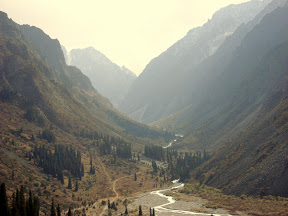
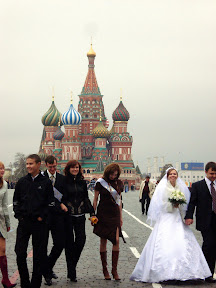
Fizemos anotações detalhadas, dia após dia, sobre todos os lugares que passamos, pessoas que encontramos e impressões que tivemos. Os links abaixo vão te levar às mesquitas do Uzbequistão, montanhas do Kyrgyzstão, ao caldeirão social da China, e a exuberância de Moscow.

Foi uma viagem de conhecimento, então os relatos estão recheados de mapas, referências na Wikipédia, fotos e videos. Além de impressões gerais, e observações sobre etnias, línguas, religião e coisas que não existem na Ásia Central logo abaixo.

Viaje conosco !

Exibir mapa ampliado

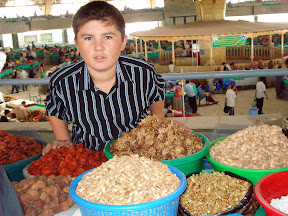
Uzbequistão